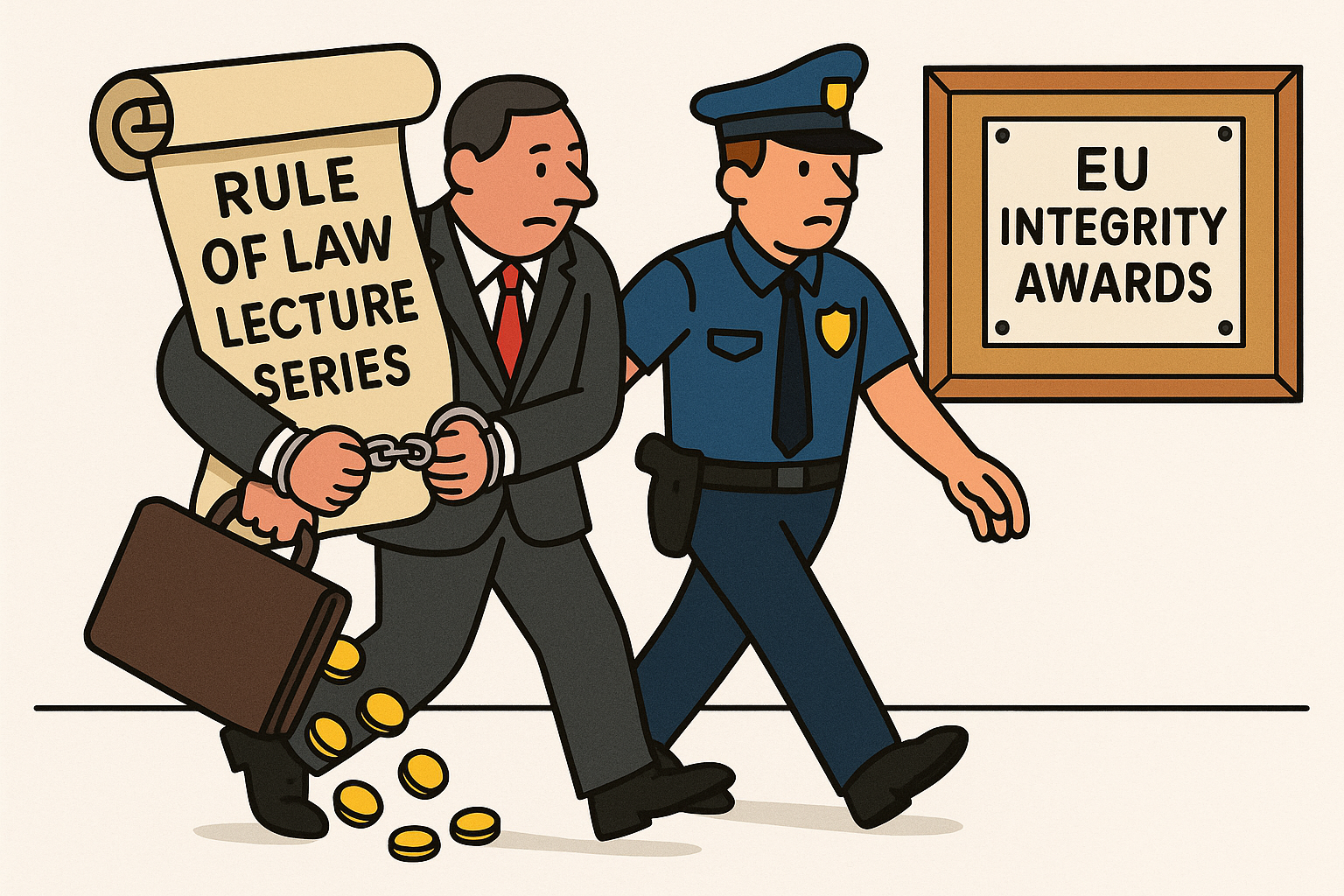
European Union officials spent years lecturing member states about rule of law, institutional integrity, and the dangers of corruption. It is therefore with a certain poetic richness that a former EU foreign policy chief has been arrested in Belgium on charges encompassing procurement fraud, corruption, conflicts of interest, and violations of professional secrecy — essentially a greatest-hits compilation of the behaviours Brussels routinely condemns in others.
The arrest marks a fresh entry in the EU's growing dossier of internal graft scandals, arriving not long after the Qatargate affair — in which cash-filled bags linked to Qatari influence operations were discovered in the homes of European Parliament figures — reminded the world that European democratic institutions are not, in fact, staffed entirely by philosopher-kings.
The Belgian prosecutor's office confirmed the charges without apparent irony. The European Parliament, an institution that has passed no fewer than several resolutions condemning corruption in third countries this year alone, declined to let the symmetry slow it down. Whether the accused will eventually be convicted remains a matter for courts; that the arrest happened at all is already a matter for historians cataloguing the gap between the EU's external sermons and its internal housekeeping.