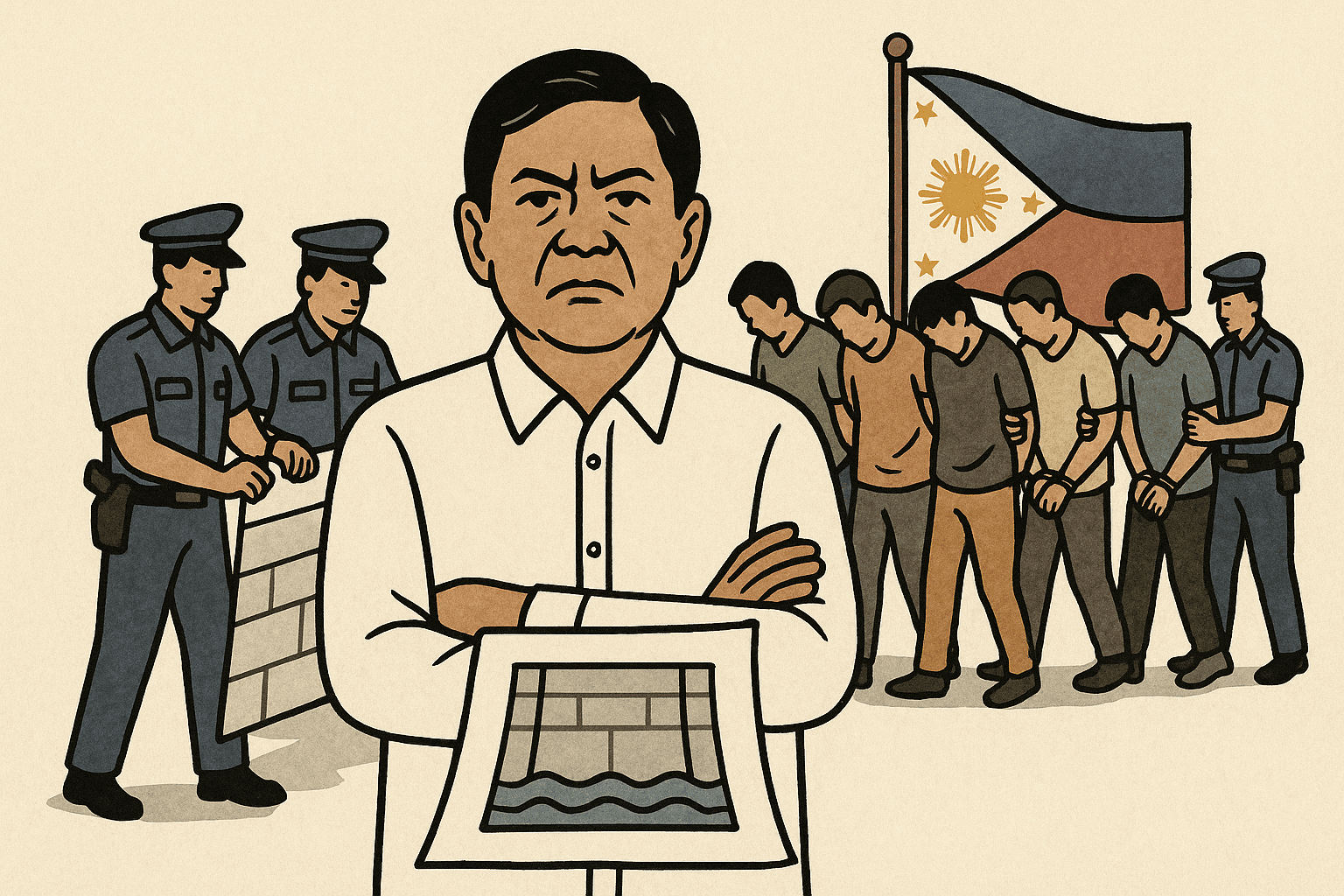
In a country battered by typhoons roughly every other Tuesday, someone decided the best use of $4.8 million in flood control funds was to build a river dike that functioned primarily as a financial instrument. Philippine President Ferdinand Marcos Jr. has announced seven suspects linked to the Oriental Mindoro flood control scandal, centered on Sunwest Corp., a construction firm allegedly owned by the family of a key figure, which billed the government for infrastructure that was either substandard or entirely imaginary.
The arrests arrive against a backdrop of nationwide fury: thousands of flood-defence projects across the archipelago were found to have been constructed from materials best described as 'aspirational,' or simply never built at all. Tens of thousands rallied in Manila across three days demanding accountability, making it one of the largest corruption protests in recent Philippine memory. The irony of flooding the streets to protest missing flood defences was apparently lost on no one except the contractors.
The Philippines has now ousted two presidents over corruption and is apparently auditioning for a third. Marcos Jr., whose own family name carries a certain biographical weight on the subject of public-fund stewardship, has framed the arrests as decisive action. Critics note that decisive action and conviction are, historically, two very different infrastructure projects in this country.